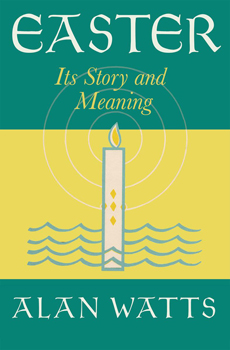
Along with Christmas, Easter Sunday is one of the two most popular celebrations on the church calendar. For many people, Easter has become associated with a perplexing jumble of non-Biblical customs: colorful eggs, evening bonfires, children's songs, and more. Philosopher Alan Watts proposes that these curiosities are vestiges of a tradition far older than Christianity.
In Easter: Its Story and Meaning, Watts goes in search of the lost origins of Easter, taking readers with him on a kaleidoscopic tour of history, anthropology, and myth. He also delves into several tantalizing historical enigmas, such as:
- Why is Christianity's most sacred holiday named after a pagan goddess?
- Is Jesus Christ historically unique, or is he just another example of the 'dying-and-rising god' archetype common in antiquity?
- How was the date of Easter calculated by the patriarchs of the early Church?
From beginning to end, Watts employs his keen intellect and vast erudition to uncover hidden connections between seemingly unrelated events. The result is a philosophical adventure that will enlighten readers of all religious backgrounds. Watts concludes that Easter is a universal celebration of nature's eternal cycle of life, death, and rebirth - a celebration for all humanity.